
The iconic Air Jordan 1 silhouette has remained a wardrobe staple for decades, adored for its timeless design and legendary status. However, a curious detail about some pairs has puzzled collectors and enthusiasts: why are some Air Jordan 1s glued?
While most sneakers utilize stitching or other mechanical attachments to assemble their components, the Air Jordan 1 sometimes includes a light adhesive attaching the stock insole to the shoe’s base. This adhesive bond is not particularly strong, allowing for easy removal of the insole without damage.
Possible reasons for this adhesive use include:
- Enhanced comfort: By adhering the insole directly to the shoe, manufacturers can minimize the gap between the foot and the shoe, leading to a more comfortable and snug fit.
- Improved stability: The adhesive can add additional structural support to the shoe, especially around the ankle collar where flexibility is crucial.
- Reduced manufacturing costs: Using adhesive instead of more labor-intensive stitching methods can streamline production and reduce costs.
However, not all Air Jordan 1s are glued. Older or limited-edition pairs are more likely to feature traditional construction methods like stitching. Additionally, variations like the Air Jordan 1 Low Chutney and the Air Jordan 1 Low Curry utilize different assembly techniques.
Here’s what to look for:
- Check the area around the ankle collar for any signs of adhesive.
- Gently pull the insole out of the shoe to assess the strength of the bond.
- Keep in mind that some glue residue may remain after removing the insole.
Understanding the unique construction of different Air Jordan 1 models can help collectors identify variations and appreciate their unique features. While the presence of adhesive may seem like a minor detail, it can provide valuable insights into the manufacturing process and the history of this legendary sneaker.
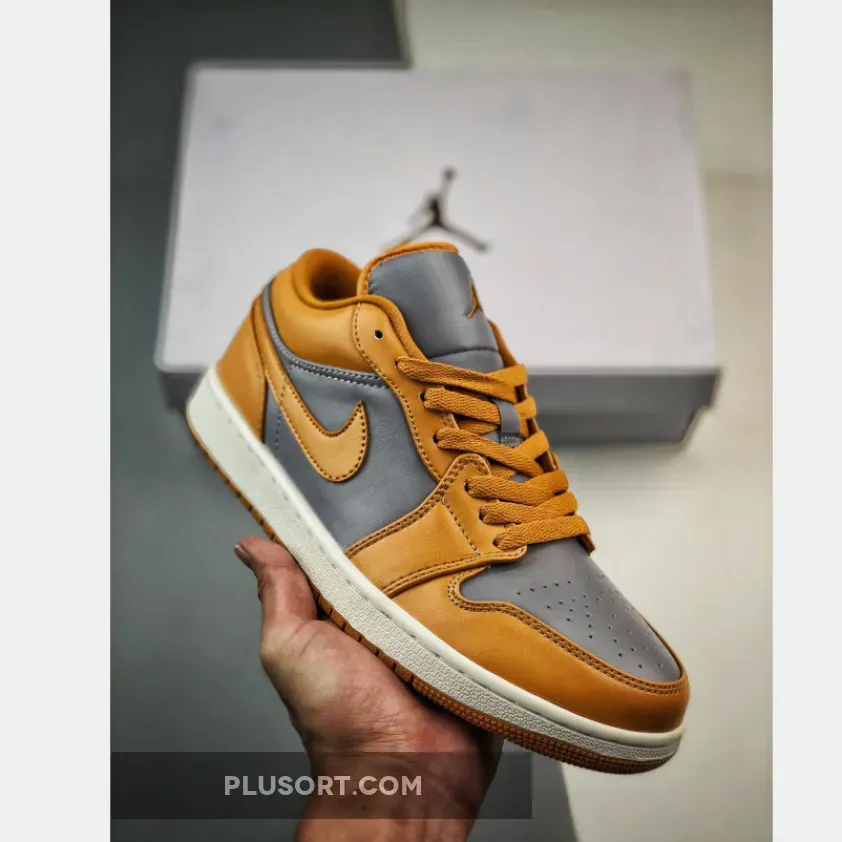 CLICK HERE TO Buy Air Jordan 1 Low Cement Grey/Chutney-Sail DC0774-020 #air jordan 1 low curry